Which AHCCCS Health Plan Is Best? 2026–27 Plans by County
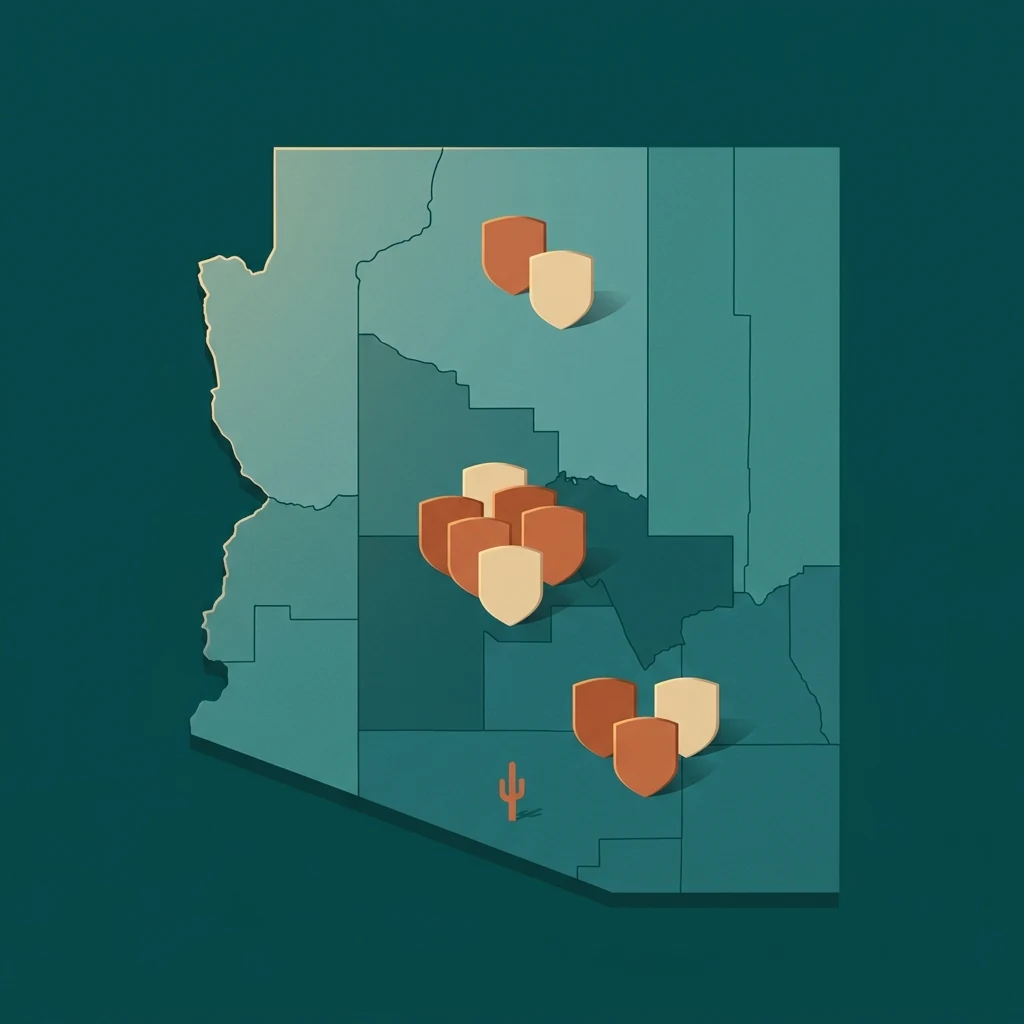
Arizona grades every AHCCCS health plan on the same report card, and no plan comes out on top across the board. In the state's latest quality review, Blue Cross Blue Shield of Arizona Health Choice has the best record on prenatal care and on follow-up after a mental-health hospital stay. Arizona Complete Health and Mercy Care do best on kids' checkups. Mercy Care leads on diabetes control, and UnitedHealthcare on cancer screening. Banner–University Family Care is at or near the bottom on mental-health follow-up and kids' checkups. Banner also has as many members as any plan in southern Arizona.
So "which AHCCCS plan is best" depends on two things: where you live, which sets your choices (two plans in most of the state, six around Phoenix), and what care your household needs most. Your doctors come first. The report card settles it when your doctors take more than one plan.
The rules in one paragraph: when you're approved for AHCCCS you can pick any plan offered in your county. If you don't, AHCCCS assigns one and mails a Freedom of Choice letter. You then have 90 days from the date on that letter to switch for any reason. After that you can change once a year during your Annual Enrollment Choice month, which AHCCCS tells you about by mail. There is no statewide AHCCCS open enrollment season like the marketplace has. To change, call AHCCCS at (602) 417-7100 or 1-800-334-5283.
Which AHCCCS health plans you can pick depends on your county
Most Arizonans outside metro Phoenix choose between just two plans. AHCCCS Complete Care (ACC), the program that covers most members, splits the state into three regions. AHCCCS's November 1, 2026 enrollment report shows where each plan actually has members:
| Where you live | Plans offered | Largest plan (share of members) |
|---|---|---|
| Maricopa, Pinal, Gila (Central) | Mercy Care, UnitedHealthcare, Arizona Complete Health, BCBSAZ Health Choice, Banner–University Family Care, Molina | Mercy Care (32%) |
| Pima (Tucson) | UnitedHealthcare, Banner–University Family Care, Arizona Complete Health | UnitedHealthcare (42%) |
| Cochise, Graham, Greenlee, La Paz, Santa Cruz, Yuma (rest of South) | Arizona Complete Health, Banner–University Family Care | Arizona Complete Health (52%) |
| Apache, Coconino, Mohave, Navajo, Yavapai (North) | BCBSAZ Health Choice, Arizona Complete Health | BCBSAZ Health Choice (55%) |
Two plans have changed names or owners recently, and that confuses a lot of members. Blue Cross Blue Shield of Arizona Health Choice is the former Steward Health Choice Arizona, which BCBSAZ bought. Northern Arizona's other plan used to be Care1st. Its members moved to Arizona Complete Health on October 1, 2024, when the two Centene-owned plans merged.
How the six plans compare on the state's own report card
The plans' differences are bigger than their marketing suggests. Every year AHCCCS hires an outside reviewer (HSAG) to check each plan's quality results against Medicaid plans nationwide. The table below takes five measures from the latest review that most households will care about. The percentages show how many eligible members got that care in 2024. The stars show where the plan ranks nationally, from one star (below the 25th percentile) to five (90th percentile or higher).
| Plan | Prenatal care on time | Kids' yearly checkups (ages 3–21) | Follow-up within 7 days of a mental-health hospital stay | Diabetes: blood sugar under control | Cervical cancer screening |
|---|---|---|---|---|---|
| BCBSAZ Health Choice | 87.9% ★★★ | 46.5% ★ | 70.4% ★★★★★ | 58.4% ★★ | 45.5% ★ |
| Mercy Care | 86.4% ★★★ | 56.0% ★★★ | 47.3% ★★★ | 64.2% ★★★ | 54.7% ★★ |
| UnitedHealthcare Community Plan | 85.9% ★★ | 53.7% ★★ | 46.3% ★★★ | 58.4% ★★ | 56.7% ★★ |
| Molina Complete Care | 84.9% ★★ | 49.5% ★ | 46.8% ★★★ | 52.6% ★ | 46.0% ★ |
| Banner–University Family Care | 84.2% ★★ | 46.4% ★ | 39.0% ★★ | 59.4% ★★ | 53.0% ★★ |
| Arizona Complete Health | 80.1% ★ | 58.5% ★★★ | 45.9% ★★★ | 54.3% ★ | 50.0% ★ |
One number stands out. Health Choice members leaving a psychiatric hospital stay got a follow-up visit within a week 70% of the time, which puts the plan in the top tenth of Medicaid plans nationally. Every other plan was between 39% and 47%. Molina has its own standout: after an emergency-room visit for mental illness, 63% of its members had follow-up within seven days, also top-tenth nationally, against 37% to 53% for the others.
The weak spots matter too. Arizona Complete Health has the lowest rate of on-time prenatal care, and Banner the lowest rate of mental-health follow-up. Health Choice, Banner and Molina all rank in the bottom quarter nationally on kids' yearly checkups.
What the report card means in each part of Arizona
Northern Arizona: Health Choice or Arizona Complete Health
For most northern households, Health Choice has the stronger record. It beats Arizona Complete Health on prenatal care, diabetes control and, by a wide margin, mental-health follow-up. Arizona Complete Health's best number, kids' checkups, comes mostly from its central and southern members. Its northern members were Care1st members in 2024, and Care1st's own 2024 rate for kids' checkups was 45.0%, no better than Health Choice. For a northern family, that advantage may not be real yet.
Cochise, Yuma, Santa Cruz, La Paz, Graham and Greenlee: Arizona Complete Health or Banner
Here the two plans split. Banner does better on prenatal care (84.2% vs 80.1%), diabetes control and cervical screening. Arizona Complete Health does better on kids' checkups (58.5% vs 46.4%) and mental-health follow-up. A pregnant member leans Banner. A household with school-age children or someone in behavioral-health treatment leans Arizona Complete Health.
Pima County: add UnitedHealthcare
Tucson-area members get a third option, and it's the most popular one. UnitedHealthcare has the highest cervical screening rate of the six plans and middle-of-the-pack results elsewhere. Banner is tied to the Banner – University Medical Center hospitals, so if your doctors are Banner doctors, that network can matter more than a few points on the report card.
Maricopa, Pinal and Gila: six choices
Phoenix-area members have every plan available, so they can choose for the care they need most. Mercy Care, the biggest plan, is in the top half of the six on all five measures and never in the bottom quarter nationally. Health Choice is the pick for prenatal care and for anyone who has been hospitalized for mental health. Molina is the smallest plan (about 34,000 central members), but it is the strongest at follow-up after a mental-health ER visit.
How to choose, depending on your situation
You already have doctors you want to keep
Check the network before the report card. AHCCCS's own advice is the same: every plan covers the same basic services, but each has its own doctors, hospitals and pharmacies. Look up your primary care doctor, specialists and nearest hospital in each plan's directory, then call the office to confirm it takes that plan for AHCCCS.
You're pregnant or planning to be
Health Choice and Mercy Care have the best prenatal-care rates where they're offered. Arizona Complete Health has the lowest. If you're already in your third trimester, AHCCCS's continuity-of-care rule can let you keep seeing your current doctor through a plan change, so switching late doesn't have to mean a new obstetrician.
Someone in your household gets mental-health care
Health Choice (after a hospital stay) and Molina (after an ER visit) have the strongest follow-up records. One exception: an adult with a Serious Mental Illness (SMI) designation is enrolled in their region's integrated SMI plan instead, Mercy Care in central Arizona or Arizona Complete Health in the north and south. Annual plan choice doesn't apply to SMI members.
You're choosing for children
Arizona Complete Health and Mercy Care have the best kids'-checkup rates. Each child can be checked against a plan's directory for their pediatrician, and AHCCCS lets a family that's split across plans move everyone into the same one.
You're American Indian or Alaska Native
You have an extra option and more flexibility. You can choose the American Indian Health Program (AIHP), AHCCCS's fee-for-service option, or any ACC plan in your county, and you can change plans at any time, not just once a year. About 94,000 members use AIHP.
How to change your AHCCCS health plan
Changing takes a phone call, and the main thing is knowing when you're allowed to. Call AHCCCS at (602) 417-7100 or 1-800-334-5283. You can request a change when:
- You're in your first 90 days after a plan was assigned to you. The 90 days count from the date on your Freedom of Choice letter, and you can also make this change online through Health-e-Arizona Plus.
- It's your Annual Enrollment Choice month. AHCCCS mails a notice when your month comes up, as long as your area has more than one plan. To keep your plan, do nothing. (DDD members' month is based on their birth month.)
- Your family is split across plans and you want everyone in the same one.
- You move to a county where your plan isn't offered.
If you lose AHCCCS and get it back within 90 days, you go back to your old plan. Children in foster care (the DCS Comprehensive Health Plan) don't get an annual choice either.
Sources: AHCCCS, Choose and Manage Your Health Plan; AHCCCS, Health Plan Enrollment FAQ.Separate from your plan choice: starting January 1, 2027, some AHCCCS adults ages 19 to 64 must show $580 a month in income or 80 hours a month of work, school, job training or volunteering, and renewals move to every six months. People who are pregnant, American Indian or Alaska Native, on Medicare or in ALTCS are among those not affected. Switching plans doesn't change this. AHCCCS says it will notify affected members and is reviewing an October 29 federal court decision on the medical frailty exemption. See KeepMyAHCCCS.com, who's exempt from Medicaid work requirements and how six-month renewals work.
Frequently asked questions
When is AHCCCS open enrollment?
AHCCCS doesn't have one statewide open enrollment period. Each member gets an Annual Enrollment Choice month, and AHCCCS mails a notice when yours arrives. The November 1 to January 15 open enrollment you may have heard about is for marketplace plans on HealthCare.gov, not AHCCCS.
AHCCCS picked my plan. Am I stuck with it?
Not for the first 90 days after the date on your Freedom of Choice letter. During that time you can switch to any plan in your county for any reason. After that you wait for your Annual Enrollment Choice month, unless your family is split across plans or you move.
Do the plans cover different services?
The basic covered services are the same in every ACC plan. What differs is the network of doctors, hospitals and pharmacies, member extras, and how well each plan gets members the care they need, which is what the report card measures.
Why do I only have two choices?
Outside Maricopa, Pinal, Gila and Pima counties, AHCCCS contracts with two plans per area: Health Choice and Arizona Complete Health in the north, and Arizona Complete Health and Banner in the rest of the south.
Not sure you still qualify for AHCCCS?
Arizona covers adults up to 138% of the poverty level, about $22,025 a year for one person in 2026, with higher limits for children and pregnancy. Check your household's limit before your renewal.
See Arizona's AHCCCS income limits →This article uses AHCCCS's CYE 2025 External Quality Review report (2024 results), its November 1, 2026 enrollment-by-county report and its member enrollment pages, as checked on November 25, 2026. Confirm which plans serve your address and whether your doctors are in network with AHCCCS or the plan before you switch. New Mexico neighbors face a similar choice: see which Turquoise Care plan to choose. Moving out of Arizona? See what happens to Medicaid when you move.