Does Medicaid Cover Dental? The 4 Coverage Tiers (2026)
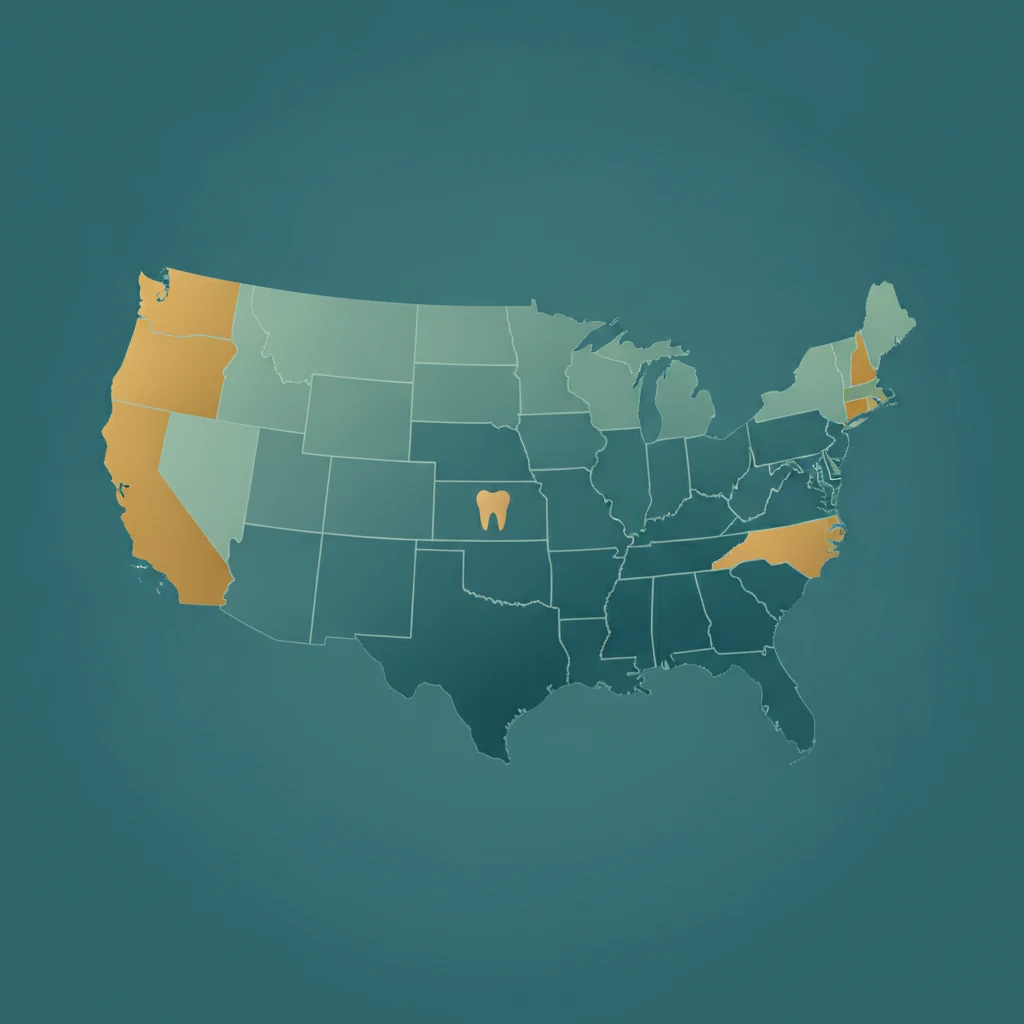
"Does Medicaid cover dental?" has no national answer, and that is the whole story. For children, the answer is a firm yes everywhere — dental is a federally guaranteed benefit. For adults, it is entirely up to your state, because adult dental is an optional benefit with no federal minimum. That is why the same 40-year-old with the same toothache can get a root canal fully covered in one state, only an extraction in the next, and nothing at all a state line away. As of mid-2026, one state (Alabama) still covers no routine adult dental at all, while states like California and New York cover a comprehensive set of services.
So the useful question isn't "does Medicaid cover dental" — it's "which tier is my state in, and for whom?" This guide gives you a simple four-tier way to place your own state, explains why the line between children and adults is so sharp, and flags a 2027 marketplace change that quietly reinforces the whole divide.
The 15-second version. Under 21? Dental is guaranteed in every state through the EPSDT benefit — including medically necessary braces. An adult? Coverage depends on your state and ranges from nothing to comprehensive. And it can change: because adult dental is optional, it's one of the first benefits states trim when budgets tighten — so always confirm your state's current rules before you book.
Why children and adults live in two different systems
Federal Medicaid law splits sharply by age. For everyone under 21, dental care is required nationwide through EPSDT — Early and Periodic Screening, Diagnostic, and Treatment. EPSDT obligates every state to cover dental services needed to relieve pain and infection, restore teeth, and maintain dental health, at reasonable intervals. It is comprehensive and it is not optional.
Source: Medicaid.gov — EPSDTFor adults 21 and over, there is no equivalent requirement. States may offer adult dental, and most do to some degree, but the federal government sets no floor — not even for emergencies. That single design choice is the reason a national "yes/no" answer doesn't exist, and it's why moving across a state line can change your dental coverage more than almost any other Medicaid benefit.
Source: Medicaid.gov — Dental CareThe four tiers of adult Medicaid dental
There's no official government classification here, so we use a simple, widely recognized four-tier model to make the variation legible. Nearly every state's adult benefit falls into one of these buckets:
| Tier | What it covers | Roughly who's here (2026) |
|---|---|---|
| None | No routine adult dental — you pay out of pocket or seek a clinic | A single state (Alabama), plus pregnancy-related exceptions |
| Emergency-only | Pain relief, extractions, treating infection — not cleanings or fillings | A small, shrinking group of states |
| Limited | A defined set of services and/or an annual dollar cap (often $500–$1,500) | A middle band of states |
| Extensive | Preventive, restorative, and often more — closer to private insurance | The majority: 38 states + DC (ADA, 2025) |
The encouraging trend is that the map has been shifting toward the "extensive" end for years. The American Dental Association counted 38 states plus the District of Columbia offering extensive adult benefits in its 2025 review, and states keep joining: Tennessee, for example, added a comprehensive adult dental benefit in 2023, extending coverage to roughly 600,000 low-income adults who previously had none.
Source: ADA Health Policy Institute — Medicaid adult dental benefitsHow to find — and double-check — your state's tier
Because this benefit is optional, your state's tier is not a fixed fact; it's a budget decision that can move. Two practical steps:
- Confirm the current level with your state Medicaid agency, not a two-year-old chart. Ask specifically whether adult coverage is emergency-only, limited (and what the annual cap is), or comprehensive.
- Watch for mid-year changes. Even "extensive" states can narrow coverage for some groups. In 2026, California moved to scale back full-scope Medi-Cal dental for certain adults based on immigration status — a reminder that a benefit can shrink for part of the population without the state leaving the "extensive" tier on paper.
If you're checking your broader Medicaid eligibility at the same time, our Medicaid eligibility by state guide keeps a plain-language summary for each state — for example California, New Mexico, and Maryland — and links out to the official agency so you can verify the dental specifics.
Braces: only when they're medically necessary
Orthodontia is the most misunderstood piece. Medicaid does cover braces — but almost always only when they are medically necessary, meaning they correct a handicapping malocclusion that interferes with eating, speaking, or oral health, and almost always only for children under EPSDT. A qualifying case (severe crowding, a cleft-related bite problem, significant jaw misalignment) can be fully covered. Cosmetic straightening — the reason most people want braces — is not covered for adults or children.
Source: Medicaid.gov — Dental CareWhat about ACA marketplace plans — and the 2027 change?
If you don't qualify for Medicaid and shop on the marketplace instead, the same child/adult divide follows you. Pediatric dental is one of the ten Essential Health Benefits (EHBs) that marketplace plans must make available. Adult dental is not an EHB — plans can offer it, but they don't have to, and when they do it's often a separate add-on premium.
Source: HealthCare.gov — Dental coverageA 2027 federal rule sharpened that line. In the HHS Notice of Benefit and Payment Parameters for 2027 — finalized in May 2026 — CMS prohibited insurers from designating routine adult (non-pediatric) dental as an essential health benefit, reversing an earlier policy that would have made it easier for states to fold adult dental into their EHB benchmark. The practical effect for the 2027 plan year: adult dental stays firmly optional on the marketplace, just as it is in Medicaid.
Source: Federal Register — HHS Notice of Benefit and Payment Parameters for 2027The upshot for planning: if you or your kids need dental care, the child side is protected on both Medicaid and the marketplace, while the adult side is a state-by-state (and plan-by-plan) question you have to check for yourself. If you're deciding between Medicaid and a subsidized marketplace plan in the first place, Medicaid vs. Marketplace insurance walks through which one you'd land in, and what marketplace insurance actually covers explains where dental fits into a plan.
Frequently asked questions
My state is "extensive" — does that mean everything is covered?
Not necessarily. "Extensive" means a broad set of preventive and restorative services, but many states still apply an annual dollar cap or exclude certain procedures like implants. Ask your state for the specific covered-service list and any yearly limit before scheduling major work.
I'm an adult in an emergency-only state and I have a cavity. What are my options?
Emergency-only Medicaid generally won't cover a routine filling. Look at a dental school clinic, a Federally Qualified Health Center (which uses sliding-scale fees), or a community free clinic — and treat it early, because emergency programs typically only step in once there's pain or infection, by which point an extraction may be the only covered option.
Does being pregnant change my dental coverage?
Often yes. Several states that limit or exclude general adult dental provide expanded dental benefits during pregnancy and a postpartum period, because oral health is tied to pregnancy outcomes. Alabama, for instance, has no routine adult dental but does provide some pregnancy-related services. Confirm the details with your state.
Can my state take away adult dental after I've enrolled?
Yes. Because adult dental is an optional benefit, a state can reduce or eliminate it — usually during budget shortfalls — and coverage levels have moved in both directions over the years. That's why the single most useful habit is verifying your state's current benefit before you rely on it.
Start with whether you qualify for Medicaid at all
Dental is one benefit inside a bigger question. Check your state's Medicaid income rules — or, if your income is above the line, estimate the marketplace subsidy you'd get instead.
Check your state's Medicaid rules →This article is for general information and reflects rules as of July 2026. Medicaid dental coverage is set state by state and changes over time. Confirm your current benefit with your state Medicaid agency before making care decisions.